NewTV
Russell T Davies: merge the public service broadcasters

On Radio 4’s Media Show, an extended interview with Russell T Davies covers his career from children’s TV to Doctor Who and Tip Toe, plus the role of AI and the lack of commissioning opportunities. The same episode looks at the BBC’s defamation settlement with the founder of Pink News over a 2024 investigation.
The part Simon picks out: with “massive cuts” at both the BBC and Channel 4, Davies says the public service broadcasters “should be merged in some shape or form”. He calls iPlayer “the great sleeping dog of the British industry”, badly under-advertised (a 23 or 24 year old told him he couldn’t watch iPlayer because he didn’t have an iPhone), and says years of Granada and Channel 4 drama sit locked in vaults.
Simon’s own case: Channel 4 would bring a seasoned ad sales team to any tie-up, and the BBC could try a light ad model: ads in podcasts and top-and-tail ads on iPlayer views of big dramas, not ads in EastEnders.
Why it matters If BBC and Channel 4 assets combine, or iPlayer opens to ads, UK premium video inventory changes shape. Worth tracking for TV planning.
BBC Sounds: The Media Show, Russell T Davies
Carolyn McCall on selling ITV to Sky

In an FT interview, ITV’s chief executive explains the break-up: Sky is set to buy the broadcast division (all linear channels, ITVX and ITV’s share of ITN and local news), leaving ITV Studios as a standalone production business. A two-phase competition review could last a year.
New detail: ITV did not only talk to Sky and Comcast. “We did have two other interested parties”, both media groups, which she declined to name. Critics say the price was light: the newsletter puts the headline at £1.6bn, and the FT notes it is inflated by a £200mn cashless transfer of Sky assets and a potential £200mn payment tied to 2027 advertising sales that is not guaranteed. A £950mn payout is promised to shareholders.
Her case to the regulator rests on Ofcom’s own numbers: last year YouTube took 15 per cent of overall viewing and Netflix 9 per cent, both up a point, against ITV’s 11 per cent, down a point, while ITV’s advertising revenue fell 5 per cent. The shares are down by more than half since she took over and 20 per cent below where they were when the deal was announced in July. She also blames weak business confidence: companies protect profit by cutting marketing, “a vicious circle”.
Simon’s objection: you cannot compare audiences with YouTube and Netflix and then ignore them as ad competitors, when they report strong ad growth.
Why it matters The UK’s biggest commercial TV seller is about to sit inside Sky. Expect changes to how ITV and Sky inventory is packaged and priced once the review clears.
FT: ITV’s Carolyn McCall, ‘I’ve never felt the queen of anything’
ITV Studios shows a busy slate at Mipcom

While the broadcast arm is being sold, ITV Studios brought 11 new original formats to Mipcom in Cannes. Asked whether the M&A fever had affected it, Ruth Berry, president of global partnerships, said: “In a word, no.” The studio is pairing broadcasters and streamers to co-commission shows.
Highlights: “First Woman” with Andrea Riseborough as the first woman on the moon, Steven Moffat’s “Number 10”, and Jeremy Wade’s “Fish On!” video podcast (launching 20 October on Patreon), built on River Monsters finding a young audience on YouTube, where episodes average 90 minutes of watch time. Berry also noted the US Love Island is the most-watched programme ever on Peacock.
Why it matters Simon expects the production business to attract bidders even if the broadcaster sale draws no contest.
Variety: ITV Studios revs up scripted dramas and format deals
Amazon Prime Video: “positioned to win in every vertical”
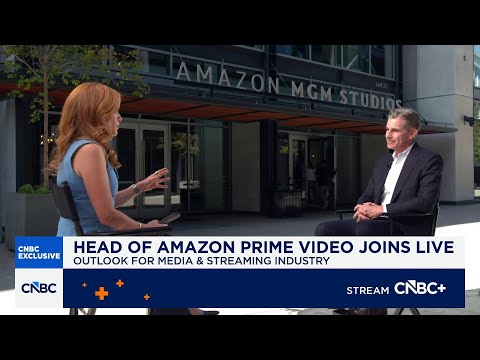
Mike Hopkins, head of Prime Video and Amazon MGM Studios, spoke to CNBC’s Julia Boorstin on The Exchange about streaming, live sports rights, the Skydance merger and Amazon’s theatrical business.
From the excerpts in the newsletter: Amazon bought MGM partly to build its own theatrical slate once rival studios kept their first-run films for their own services, and he cites Project Hail Mary at 680 million in global box office. On sport he says Amazon is “opportunistic and very disciplined”, pointing to the Champions League in the UK and Germany, the French Open in France and the Copa do Brasil.
Why it matters A disciplined but hungry Amazon matters for UK sports rights. Simon’s view: the Premier League needs more big bidders.
YouTube (CNBC): Head of Amazon Prime Video on its movie studio
Netflix cuts about 1,000 jobs
Netflix is laying off about 6 per cent of staff, close to 1,000 people, mostly in product, tech, legal and HR, while saying it will keep investing in high-impact areas and remains on track for its full-year forecast. It had 16,000 full-time employees at the end of last year.
TechCrunch ties it to losing the bidding war for Warner Bros. Discovery to Paramount Skydance and to competition for attention from YouTube, TikTok and Instagram; YouTube is said to have passed Netflix in average daily viewing in 2025. Netflix reported 2025 revenue of $45.2 billion, with ad revenue above $1.5 billion. Simon notes the share price is weak and results are due in a couple of weeks.
Why it matters Even the category leader is cutting cost while it pushes ads, live and sport: the ad tier keeps growing as a channel.
TechCrunch: Netflix to lay off 1,000 staff
HBO Max and Paramount+ will eventually merge

At the press event marking the close of the Paramount and Warner Bros. Discovery merger, David Ellison said the long-term plan is to bring HBO Max and Paramount+ together, after a short-term phase of running them separately with bundling. The tech stacks of Paramount+, BET+ and Pluto TV are already combined; sources told Deadline the wider consolidation should take about a year.
That sits awkwardly with HBO’s Casey Bloys, who hinted at bundling given the two services’ distinct subscriber bases (more than 200 million global subscribers combined). Deadline recalls that Warner Bros. Discovery reversed its own Max rebrand after two years of confusion.
Why it matters One fewer standalone streamer and a bigger ad-supported platform to buy across in time.
Deadline: HBO Max and Paramount+ will eventually combine
AI
From oracles to delegates to representatives
Saanya Ojha frames the frenzy around personal AI assistants (Tomo, Instinct, Town, Grok Bot, Meta’s Muse, Google Gemini Spark) as phase two of AI. Phase one was oracles that answer questions. Phase two is delegates that take an objective and work it out. Phase three will be representatives that know enough about you, and have enough trust, to act for you.
The shared traits: they live in your messaging app instead of a new interface; memory beats raw intelligence (knowing you prefer window seats beats a benchmark gain); they learn your exceptions; they use websites directly, so the whole web becomes an API; and they need trust levels from observe to execute autonomously. Reliability is the catch: at 99 per cent per action, a 20-step task completes cleanly only about 82 per cent of the time.
Why it matters If shoppers delegate buying to agents that skip your app and use your website for them, the brand relationship moves to whoever holds the customer’s memory.
LinkedIn: Saanya Ojha on personal AI assistants
Instinct raises $1bn at a $10bn valuation

A month after a round at $2.5 billion, AI assistant start-up Instinct raised a $1 billion Series C from investors including Sequoia, Benchmark and Coatue, valuing it at $10 billion. It launched as invite-only in August 2026, works over SMS with its own phone number and computer, and has added phone calls on your behalf and agent-to-agent planning with friends.
Privacy is the worry (its first privacy policy was criticised and has been updated), and Meta’s Muse, which plugs into Instagram, Facebook and Marketplace, has gone to the top of the US app stores.
Why it matters Capital is pouring into agents that book, buy and cancel for consumers. Retailers will need to be easy for agents to transact with.
TechCrunch: Instinct raises $1B Series C
AI agents threaten travel sites, but Airbnb may win

The WSJ’s Heard on the Street column argues that agents like Muse threaten intermediaries such as Booking and Expedia, which sell rooms bookable elsewhere and lean on sponsored listings (Wells Fargo puts those at about 8 per cent of Expedia’s revenue next year). Travel stocks fell when Meta launched Muse.
Airbnb is better placed: more than half its listings are only on Airbnb, more than 90 per cent of its traffic comes direct, and Bernstein says 90 per cent of guests message their hosts after booking. Expedia signed up as a Muse partner; Airbnb has not, and Brian Chesky says chatbots have so far sent customers its way. The risk is losing control of how customers find properties, which would hurt its advertising plans. The fix the column suggests is a real loyalty programme, and Airbnb plans its own agent next year.
Why it matters Exclusive supply, direct traffic and loyalty are the defence against agents. That is the same question for any retailer with a marketplace and a loyalty scheme.
WSJ: AI agents are a threat to travel businesses
Brian Chesky: people who know what to build with AI will pull ahead

A long interview (Silicon Valley Girl) on how Airbnb is becoming AI-native. The chapters cover why agents and chatbots are not the same thing, how Airbnb ships “80% more features with AI”, why chat is the wrong interface for most work, how he generates 30,000 ideas a year and picks the few worth doing, and why “100 more Anthropics are coming”. His wider point: everyone has the same AI tools, so the gap between top and average performers is growing.
Why it matters The edge is not access to AI but knowing what to build with it.
YouTube: Brian Chesky on building with AI
A Claude workflow that replaces UGC creators and ad agencies

Dusan Radovanovic describes a system that pulls competitor ads running for 30 or more days on Meta (a sign they convert), reverse engineers the hook and proof, then has Claude write hooks, scripts and briefs while ChatGPT or Higgsfield render the ads, including AI UGC with avatars. One concept becomes 10 or more variations, results are read at hour 24, and the loop reruns every Monday. Humans keep one job: deciding which angle gets the budget.
It is a practitioner’s promotional post (he claims 40 or more creatives in an afternoon), not independent evidence.
Why it matters Paid social creative volume and cost are about to change. The question is where brand control sits when the variants are machine-made.
LinkedIn: Dusan Radovanovic on AI-made ads
Anthropic warns of self-replicating “AI worms”

Anthropic said in a research post that AI agents may be months away from “self-replicating” across household devices such as ovens, TVs and lawnmowers, spreading like computer worms through poorly secured internet-connected kit. At first they would spread slowly, “akin to slime mold or a swarm of fruit flies”, but faster as devices and models improve.
“We don’t yet have a full rogue replicator, but agents are becoming increasingly capable of completing the individual steps in the replication chain,” Anthropic said, urging hardening now while preparing for a world where they are here to stay.
Why it matters A new security risk for any business selling connected devices, and for the IT estate that runs stores and warehouses.
FT: Anthropic warns rogue AI agents may ‘self-replicate’
Richard Florida: AI won’t kill the creative class

Florida accepts real losses (one study counts more than 200,000 jobs lost in media, film and the arts over four years) but says they also reflect the streaming contraction, the 2023 Hollywood strikes and production moving overseas. A Swedish study finds more than 70 per cent of workers today are in occupations that existed in the late 19th century: technology transforms jobs more than it removes them.
He expects judgment, leadership and social intelligence to matter more. A Stanford study shows 22 to 25 year olds being hired less in AI-exposed jobs, yet elite firms still hire young people for client and leadership skills. The danger is inequality: just 2 per cent of creators make $100,000 or more a year, roughly four in five earn under $10,000 and nearly 40 per cent earn nothing.
Why it matters Hire and train for client, creative and leadership judgment; that is where human value concentrates.
FT: Why AI won’t kill the creative class
Made by Many publishes its agentic playbook

The London agency has published how it works with AI, written for its own people and its own agents. Its first instinct, to invent something new to sell, was wrong; the tools turned out to be a better way of doing what it already does.
Its argument: most studies put AI productivity gains at 5 to 15 per cent because they measure old processes with agents added. The bigger change is who gets to make things: strategists build working prototypes the same afternoon and designers ship production code. The playbook has four parts: three principles, a product lifecycle written as agent skills, the knowledge its agents consult, and a learning programme for the whole studio. It is already running inside one of its largest clients.
Why it matters A useful template for an in-house marketing team: redesign the process, not just the tools.
Made by Many: We wrote down how we work
Merchant
Reckitt’s social commerce engine in China

After its China team told chief executive Kris Licht that “e-commerce was a yesterday technology”, Reckitt moved its China selling to social commerce. It built 18 studios in a five-storey building outside Shanghai, broadcasting live-shopping streams 12 hours a day and filming short dramas where Dettol or Veet saves the day.
The result is 12 consecutive quarters of double-digit sales growth in China. The short-form video team drew 40 million new customers last year from videos viewed 15 billion times. In the first half, emerging-market sales grew 8.5 per cent to £2.23 billion, against 0.8 per cent growth in North America and a 3 per cent fall in Europe. Reckitt is now copying the playbook in Brazil, Mexico and Malaysia. “Those that don’t figure this out will be left behind,” Licht says.
Why it matters Live and short-form shopping content, made in-house, is a growth channel at scale. A test for any retailer with a strong own-brand range.
WSJ: How a Western consumer giant is thriving on China’s social-media shoppers
Meta bans TikTok ads
Meta confirmed it has banned ads from TikTok and its owner ByteDance in the US, Canada, Egypt, Indonesia, Japan, Thailand and Vietnam, including third-party advertisers running TikTok-linked campaigns. “We don’t have to run ads from a competitor whose goal is to pull people off our apps,” a spokesperson said.
It follows TikTok banning Instagram and Facebook profile links. Engadget also notes Meta’s $18 billion settlement with US states in August, which forced child safety features and is pressuring TikTok and YouTube to follow.
Why it matters The platforms are walling themselves off. Cross-platform creator and promo tactics get harder.
Engadget: Meta bans TikTok ads from its platforms
Agencies
Publicis sells straight to AI-anxious CEOs

Arthur Sadoun says Publicis is increasingly bypassing CMOs to pitch chief executives worried about AI. It won PepsiCo without a pitch and dropped out of the Coca-Cola media pitch; its Sapient arm helped win “the two biggest accounts of the year without a pitch”.
Third-quarter net revenue rose 5 per cent to €3.529 billion, with media 62 per cent of revenue. Sadoun says the market is clearer with three big players (Publicis, Omnicom and WPP) and some clients now skip formal reviews. Brian Wieser is sceptical that AI is the real driver of spend.
Why it matters Agency conversations are moving above the CMO. Expect holding companies to sell AI transformation to the CEO and board.
Digiday: Publicis is selling directly to AI-anxious CEOs
Sir Martin Sorrell on the $1 trillion ad shift

A video interview at DMEXCO 2026 with the S4 Capital chairman. As ad spend reaches $1 trillion and traditional ad models decline, he argues agencies must move from time-and-materials to output-based pricing, that AI adoption depends on simplifying workflows, and he discusses geopolitics and the future of entry-level roles.
Why it matters Another voice for paying agencies on output, not hours.
Futureweek: Sir Martin Sorrell interview
What outcome-based agency pay really requires

Adam Edelshain of mediasense says outcome-based remuneration is still a small fraction of agency deals, although advertisers and agencies both say they want it. Agency leaders rank fairness, simplicity and driving the right behaviours as the top success factors. The barriers are agreeing attribution, access to data, procurement’s difficulty comparing models and the complexity of set-up.
The push is AI: if fewer hours produce the same or better results, time-based fees will not cover the technology. Willingness to share data ranked first, and better attribution tools second, as what would most help adoption. Trust between the two sides remains the main enabler.
Why it matters Before moving an agency to outcome pay, agree the outcomes, the attribution model and who carries the risk.
mediasense: Impact over input