Nest ecomm update - Friday 2 October 2026 - Will Ashton's newsletter, fully read
How advertisers are adjusting to creative diversification on Meta; PMax is running your ads on YouTube, but that isn't a YouTube strategy
Every link in the newsletter was opened and read where the sites allowed it. Each story combines the article with Will's framing from the email and a short digest take. Sections follow his: Articles of the Week, Ad of the Week, market insights, platforms, brand and DTC, jobs and Nest's platform trends. Unreadable items are flagged on the page, not dropped.
Nest news and the week's framing
Will Ashton's intro: how advertisers are adjusting to creative diversification on Meta; why PMax running your ads on YouTube is not a YouTube strategy; and how to market when most web traffic isn't human. TL;DR from the email: Meta CPA down 12%; UK consumer confidence improves; Meta takes a fee from Muse purchases; Facebook releases a standalone Groups app; Shein sales fall in Europe; Dune London explores a business sale.
TikTok Unlocked: highlights and the Urban Outfitters talk
Nest's news this week is that the highlights from its TikTok Unlocked event are online: TikTok's Kris Boger on why TikTok funded Hummingbird (Nest's AI creative platform), and Nest's live demo. A second recording covers the creative strategy behind Urban Outfitters' TikTok scale-up, tied to the Ad of the Week below.
Both pages are video embeds with no transcript or text, so the content of the talks could not be read. Only the page titles and descriptions are summarised here (second recording: https://nestcommerce.co/tiktok-x-nest-highlights/?v=urban).
Articles of the Week
Will's three picks: Meta's creative diversification guidance, PMax versus a real YouTube plan, and Meta's Pete Buckley on non-human web traffic.
How advertisers are adjusting to Meta's ad creative diversification best practices
Meta has updated its best-practice guidance on how its ranking models treat creative. Olivia Cripps of Billion Dollar Boy says Meta's engines won't rank an ad highly if it looks like other creative from the same advertiser or has the same opening hook - the system sees them as the same ad. Her example: the same video of one person with 'Text A' and 'Text B' overlays counts as the same creative. Meta's advice includes mixing video and static assets and varying hooks, messaging and tone (Ankit Jadav, Rain the Growth Agency).
Meta spokesperson Alisha Swinteck says the guidance is deliberately broad and outcome-based: 'diversify your creative, test, and let the system optimize'. Meta won't say how its models represent individual creatives. On Meta's Q2 call, CFO Susan Li said model changes plus the Gem recommendation model lifted ad clicks 8.3%. Meta is also testing creative-insights metrics in its Insights API; a 'small number of agencies/GCR resellers' have had them since June.
Digest takeThis is the practical lesson of the week: variation in hook and format counts, a text swap does not. It matches Nest's own data below, where creative-driven conversion rate rose for a second week. Don't assume the Insights API metrics reach you soon, as access is limited to a handful of resellers.
Why Performance Max isn't a YouTube ad strategy for ecommerce
PMax pushes some of an ecommerce account's budget into YouTube by default, using creative made for Shopping and Search, and when no video is uploaded Google builds AI videos from feed images and stock transitions. The author says brands either leave YouTube to PMax and accept inflated numbers, or test it once, judge it like Search on ROAS, and write it off.
His case: Search and Shopping are pull channels, YouTube is push, so it needs different creative and metrics. He notes Google's conflict of interest (a Google VP admitted in the antitrust trial to adjusting search auction pricing by up to 5%, 10% on some queries). YouTube works for product discovery, brand awareness, seasonal promotions and launches, and brands that succeed build Search and Shopping first. Creative should follow a direct-response structure (hook in five seconds, problem, product as mechanism, demo, proof, call to action), and refresh fast: test 20 to 30 videos a month, not two or three.
On measurement: view-through conversions flatter YouTube in PMax, and stripping out view-throughs and remarketing can leave the contribution close to zero. For discovery and awareness measure lift in branded search, new customer rate and direct traffic. For promotions and launches use blended ROAS across the funnel, and for consideration look at assisted paths in GA4, which still undercount.
Digest takeUseful if you run PMax for ecommerce: check the placement report for how much goes to YouTube, and upload real video assets. The piece is one agency's view, and the antitrust point is context, not data on your account.
Peter Buckley: for the first time, most web traffic isn't human
Buckley cites Cloudflare Radar live data with bots at 60% of traffic and people at 40%. As Cloudflare's CEO pointed out, a person choosing a camera might visit 5 websites and an AI agent doing the same might visit 5,000. His three 'so what' points: click-based measurement gets weaker because the decision happens without a click; visibility in AI matters more and looks more like brand marketing than SEO, as models recommend what they've read most about, which is accumulated rather than optimised; and marketing needs to get ahead of the prompt because later journey stages are becoming a 'visibility lottery'.
Comments: Gregory Shickle says high fashion and car brands have a digital footprint built for humans, and technical, machine-readable content matters more than ever; Venkat Raman says click and impression measurement weakens, so for MMM use spend as the input; Guy Kedar notes he recalled hearing a version of this over 10 years ago.
Digest takeKedar's pushback is worth keeping in mind: bots have long been a large share of traffic, so the novelty is that agent-driven research now replaces human comparison. The measurement point is the useful one.
Ad of the Week
Urban Outfitters, from Nest Studio.
Urban Outfitters ad: creator UGC comparing URL vs IRL
The CBI retail sales balance fell to -55 in the year to September (from -48), and orders placed with suppliers fell to -62 (from -29), the fastest fall since the survey began in 1983, with -63 expected in October. Online sales volumes fell to -68 from -43. Retailers judged sales for the time of year as -40 (from -26). The CBI's Martin Sartorius says weak sentiment is behind the record order cuts, with weakness spreading to wholesalers and motor traders. The CBI used the numbers to urge cuts to employment costs and business rates reform before the Autumn Budget.
Digest takeThe online figure matters more than the headline for an ecommerce reader: a -68 online balance means weaker demand just ahead of peak.
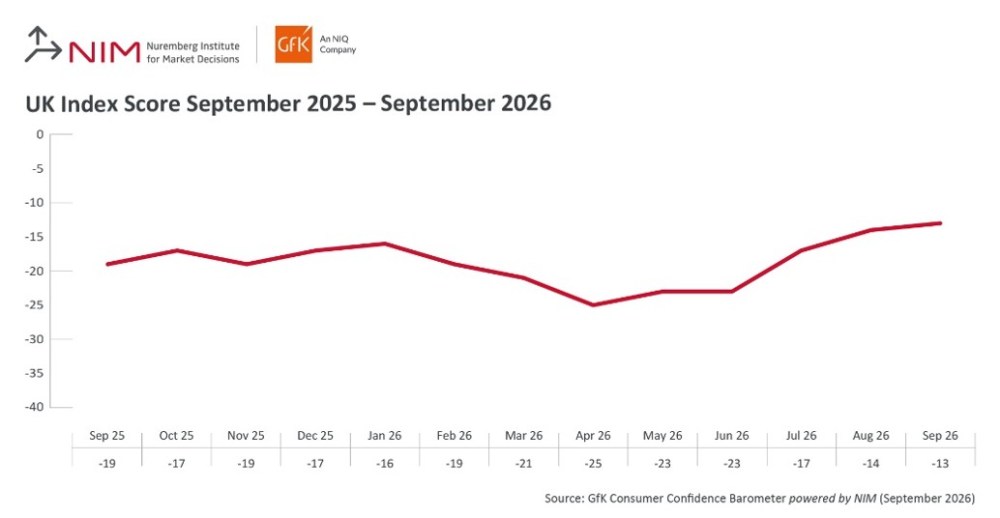
The GfK index rose one point to -13, the first three straight monthly rises since summer 2024. The biggest gains came in views of the wider economy over the past year (+4) and personal finances over the same period (+3); forward-looking measures each rose one point. The Major Purchase Index fell one point as the Golden Quarter approaches, and the Savings Index rose five. Neil Bellamy of GfK warns that with inflation, energy and fuel prices rising 'could we soon see consumer sentiment falter?'
Digest takeRead alongside the CBI numbers: sentiment is better, but retailers' actual sales and ordering are far worse. Confidence is still firmly negative.
BRC finds retailers pay 72p in tax for every £1 of profit
BRC and UKHospitality analysis puts retail's effective tax burden at 72p per £1 of pre-tax profit and hospitality's at 82p, against a 50p average across 11 sectors and 40.5p for banking. The two industries paid a combined £62bn in business taxes in 2025/26 (VAT, business rates, employer NI and others). Retail employment is down 122,000 jobs in two years and hospitality down 93,000. Together they pay almost a third of business rates, and one in seven high street properties is vacant. Helen Dickinson of the BRC says it is feeding 'job losses' and 'shuttered shops'. Retail taxes have risen 20% over two years, and retailers pay £1.8bn more in rates than two years ago.
Digest takeA lobbying document ahead of the Budget, and it reads that way. The sector comparison is the useful part.
US consumer optimism slides to its lowest since 2014
The Conference Board index fell 6.7 points to 81.9 in September (consensus about 89). For the first time in the four-year history of the question, more people said their personal finances were bad than good. Present Situation Index fell 7.9 to 109.3 and Expectations fell 5.9 to 63.6. The jobs 'plentiful' minus 'hard to get' gap shrank to 1.7%. Average expected inflation is 6.1% (median 5.1%), pushed by uncertainty over the Iran war, surging Treasury yields and mortgage rates, and a September fuel price surge. The University of Michigan survey also fell 7% to its second-lowest reading on record. Job openings in August were 7.08 million vs 7.2 million expected.
Digest takeThe US picture is worse than the UK's. If you have US spend, expect softer Q4 demand and more price sensitivity.
The Rundown: average CMO tenure has shrunk by over a third in 16 years
A Findem and CMO Huddles survey of 13,000 US marketers found median CMO tenure is down 35% since 2010: CMOs who started in 2010 stayed about four years, those from 2022 on lasted 2.6 years. The median tenure of CMOs in post now is 36 months and software firms are the shortest at 27 months. Only the CFO (2.1 years) lasts less among C-suite peers; CEOs average 7.4 years (Spencer Stuart). The piece links it to falling CMO influence: marketing spend as a share of sales flat at 7.8% against 11.2% in 2018 (Gartner), only 36% of Fortune 500 firms using the CMO title (Forrester), and 46% of CMOs reporting to someone other than the CEO. An IDC survey found 41% of marketers say CEOs want a new customer acquisition strategy while 30% of CMOs think their priority is elsewhere.
Digest takeThe framing is that misalignment on expectations matters more than the tenure number itself.
Fospha (an attribution vendor) argues cutting upper-funnel spend doesn't save the money, it turns it into a tax collected at Peak at the year's highest rate. Last-click credit hides the halo effect on branded search and direct traffic, ad effects fade on a curve, and pausing a campaign for two months loses the audience and the automated bidding's training data (Advantage+, PMax). In Fospha's client data, top-quartile Q4 ROAS brands kept at least 20% of funnel budget in awareness and consideration every quarter, versus 9 to 11% for the other 75%. Niket Shah of Acceler8 Labs: every delay has a tax.
Digest takeVendor data from its own client base, so treat the 20% line as a benchmark from one dataset. It lines up with the PMax and YouTube article above.
Platforms
Meta's agent Muse, Instagram live boosts, Facebook's Forum app, TikTok and Kantar, ChatGPT shopping and ChatGPT ads measurement.
Business Insider on why Muse may end up selling ads
Kafka asks what happens if users don't shop much through agents like Meta's Muse. He cites MoffettNathanson: of an average 47 payments a month (Atlanta Fed), once you remove bill payments, fuel and in-store shopping, only about 11 are relevant to an agent. A small fee on 11 small transactions makes real money hard to earn without wide adoption, which is why the analysts think Muse ends up as another place for Meta to sell ads, even though Meta hasn't said so. Another theory: subscriptions. Kafka says he has gone from 'I'll never give a bot my credit card' to using Stripe's Link through an agent, and spent $17 on a luggage storage service during a San Francisco trip.
Digest takeThe article also names other agent products by way of comparison (including one called Instinct, described as a startup valued at $10bn); that's the publisher's content, nothing to action. The argument that agents have few relevant transactions is the sharpest bit.
At Connect on 23 Sept Zuckerberg said Meta will earn from Muse by taking a small fee from transactions rather than putting ads in it, with Muse free for a large token allowance meanwhile. Meta's Alexander Wang says Muse negotiated $85 a month off a cable bill. Connectors include Stripe Link, Shop Pay, PayPal; Walmart, Best Buy, Gap, Sephora, Ulta, Wayfair, Michael Kors, American Eagle, DICK'S and Fanatics; Expedia and Instacart; and Notion, Granola, GitHub and Box. Wang says Muse can access the whole Shopify catalogue and buy through Link and Shop Pay. The connector platform opened to developers last week and got over 1,500 applications in under a week.
MediaNama notes retailers are split: Amazon is blocking agents from buying for its customers, while Walmart, Best Buy and Sephora integrated. Nikhil Pahwa argues merchants resist because agents cut into on-site advertising revenue.
Digest takeThe retailer split is the story for ads: whoever lets agents in gives up some retail media value. See also the BI piece above.
Instagram now lets you boost a livestream as an ad
Creators can boost live videos from the app; the live becomes the ad creative, shown in Feed, Stories and Reels, and only runs while the creator is broadcasting. Instagram suggests scheduling the boost at least two hours before going live to cut delivery delays. Ads for upcoming Lives were already possible in Ads Manager, so the change is a quicker in-app route without full campaign setup.
Digest takeSmall product change, mostly convenience for creators.
Facebook launches Forum, a standalone app for Groups, in the US
Forum is a separate app synced with your Facebook groups, available on iOS and Android in the US, tested since May. New features focus on finding quality advice from real people and browsing groups by interest, including ones you haven't joined. A new member role to recognise top community voices replaces contributor badges and the group expert role. Admin tools are coming 'in the coming weeks'.
Digest takeFacebook is making Groups a stand-alone surface. Nothing on ads yet.
TikTok tops marketers' list for 2027 spend increases, for a fifth year
The linked page is TikTok's own write-up of Kantar's Media Reactions report. It says TikTok is the top innovative media brand among marketers and the top platform where marketers plan to increase ad spend for 2026, from over 21,000 consumers across 30 markets and nearly 1,000 senior marketer interviews. Kantar also found consumer acceptance of ads at its highest since the study began in 2020, and TikTok ranked #1 among consumers for capturing attention.
Digest takeMismatch to note: the email says 2027 spend and a fifth year, but the linked page is the 2025 report (dated 23 Sept 2025) about 2026. A 2026 Kantar release I found separately says a net 75% of marketers plan to raise AI assistant investment in 2027 and has YouTube first on marketer receptivity, with TikTok fourth. I could not confirm the 'fifth year' claim from the 2026 material.
ChatGPT adds virtual try-ons as OpenAI pushes further into shopping
OpenAI launched virtual try-on and Favorites globally. Users upload a selfie or full-body photo and use a Try On button in shopping results, or upload an item image (like a web screenshot). Favorites saves products to a Library alongside try-on images. The features use the new ChatGPT Images 2.5 model. TechCrunch notes OpenAI earlier dropped an instant checkout feature that didn't perform well.
Digest takeTry-on is a conversion tool aimed at fashion. Together with the dropped checkout, it shows OpenAI is still finding what works in shopping.
Measurement gaps are keeping ChatGPT ads budgets at test level
Seven months after ChatGPT ads started, measurement is the sticking point. Accuracast ran a UK lead-gen campaign and two weeks later the platform showed zero conversions, and ChatGPT reported about 100 clicks where its own tracking saw 20. Others (AdRoll, Jellyfish) haven't seen click discrepancies. Where conversions register they arrive 24 to 36 hours late, against a few hours on Google, and there's no demographic or prompt data. Many advertisers haven't switched on conversion tracking because it requires signing OpenAI's tracking terms, which legal teams won't, and OpenAI told Jellyfish it doesn't accept red lines. Custom audiences are slowed for the same reason.
The result is a catch-22: better tracking needs advertiser data, and those with the most data are least willing to share. Many still bid on clicks or impressions, though CPA bidding is now available (Jellyfish's Victor Batista calls it 'pivotal'). Delivery is unpredictable: Accuracast saw one campaign serve thousands of impressions one week and under 100 the next.
Digest takeThis is why budgets stay small. If you test, set a fixed test budget, run your own tracking in parallel, and don't scale until the click and conversion counts reconcile.
Brand and DTC
Shein, M&S x Sephora (also in today's Retail Week page), Hush and Dune London.
Shein's Europe sales fall 14% after it raises prices and cuts online ads
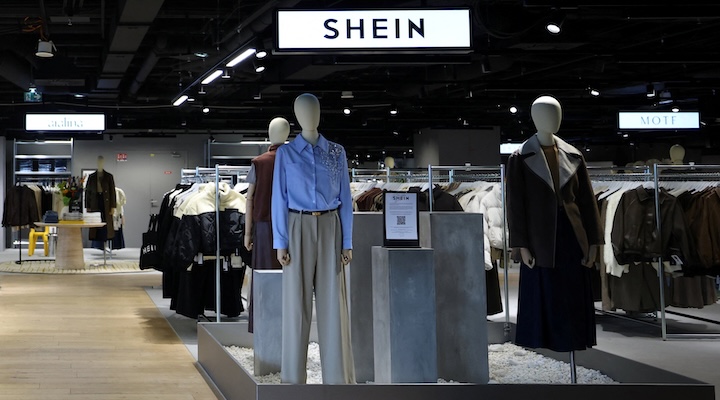
In its first results as a listed company, Shein posted Q2 adjusted net profit of $228m, down 67%, with margin down to 2.1% from 6.2% as Middle East conflict raised jet fuel and freight costs. Sales were $11.08bn (+0.9%): Europe fell 13.9% to $3.77bn and the US fell 6% to $2.5bn, with growth in Latin America offsetting. In Europe Shein raised prices and cut online advertising ahead of the EU's 3-euro fee on low-value parcels from 1 July. Shares have dropped 27.3% from the HK$48.56 offer price since the 1 Sept debut. Jefferies said earnings were over 10% below the low end implied by the prospectus, with fulfilment costs up 18.1%.
Digest takeA rare case where cutting ads and raising prices show up in the numbers. Worth noting for anyone competing with Shein for fast-fashion shoppers in Europe.
M&S and Sephora will create a beauty destination in selected M&S stores and on M&S.com from spring 2027, in 100 high streets and retail parks, with specialist teams, home delivery and Click & Collect. The brand line-up, new-to-M&S names and selected Sephora exclusives will be confirmed closer to launch. John Lyttle says M&S will keep investing in its own-label beauty. Sephora opened its latest store in Glasgow in August.
Digest takeThis is also the lead story in today's Retail Week Editor's Choice page, where it has a longer treatment.
Hush heads to the high street with first stores after 23 years online-only
Hush will open three stores: Bluewater, Guildford and Marlow. Founded in 2003, its core customer is mid-life women with moderate to high disposable income. The move follows ex-Reiss executive Sally-Anne Newson joining as chief customer officer in June. CEO Sarah Miles told The Times customers want 'a deeper and more physical relationship with the brand' that complements the digital offer. The article cites Skims as another digital-first brand moving into flagship stores.
Digest takeAnother online-only brand going physical, a trend also seen in Ted Baker's new London store in today's Retail Week page.
Dune London explores a sale as its founder plots retirement
Dune has hired FTI Consulting's M&A team to explore investment, partnership or ownership options as founder and chairman Daniel Rubin plans to retire. The process is at an early stage with no preferred route. Dune sells in 37 markets with over 1,000 points of distribution, partners with Nordstrom and Dillard's in the US, and has launched on Zalando in Europe. It has generated over £130m in revenue.
Digest takeThe interesting part is the international sell-through. Buyers will be paying for the US and European wholesale channels.
Ecom marketing leadership jobs
Four listings from the email, read on LinkedIn.
Four roles
Head of Performance Marketing, Frasers Group: owns group performance strategy across paid search, affiliate and social, customer acquisition and budget allocation, leading a team.
Director of Acquisition - Weight Loss, Voy (London): owns the full acquisition budget and channel teams, scales creative testing, opens TV, OOH, podcast and influencer channels, owns attribution and incrementality; asks for 7+ years and experience of £50M+ annual budgets.
Head of Performance Marketing, Fresha (London): performance marketing role at Fresha, the beauty and wellness booking platform (140,000+ businesses).
Meta and Google trends (Nest internal data)
Seven days up to the prior Thursday. These are Nest's own client-account numbers, not an industry benchmark.
Platform numbers
Meta: CPM down 0.8% (UK up 2.5%, US down 20%, rest of world down 0.2%). CTR up 5.9% (UK +4.8%, US +3.8%, ROW +11.9%). CPC down 6.4% (UK -2.1%, US -22.9%, ROW -10.8%). CVR up 6.3%. CPA down 12%. AOV down 6.1%. Will's summary: conversion rates rose for a second consecutive week, and with cheaper traffic acquisition costs fell 12%.
Google: CTR up 11%, CPC down 5.4%, CVR down 0.5%, CPA down 5.1%, AOV up 3.6%. Traffic and acquisition costs both down week on week.
Digest takeThe UK CPM is up 2.5% while the US CPM is down 20%, so the 12% CPA drop is largely a US and rest-of-world story. AOV down 6.1% on Meta means part of the CPA gain is smaller baskets. The US move may reflect the weak consumer data above, with advertisers pulling back.
Pick of the week: Meta's creative diversification rules
The Marketing Brew piece is the one to act on. Meta's ranking engines treat ads with the same look or the same opening hook as one creative, so a text swap or a new overlay on the same video does not give you a second shot in the auction. The guidance is to mix video and static, and to vary hooks, messaging and tone. Nest's own numbers support the direction: Meta CVR is up 6.3% for a second week and CPA is down 12%, although AOV is down 6.1%, so some of that is smaller baskets.
What to do: audit your current Meta ad set for real variation (different people, formats, hooks), not variants of the same asset, and ask your Meta rep or agency whether you're in the creative insights test.
Runner-up: Digiday on ChatGPT ads measurement. It explains why budgets stay at test level, and tells you what to check before spending.