NewTV
Brittin tells the BBC to be “a bit more Elvis”

At the RTS London Convention the new Director-General set out his priorities ahead of charter renewal: the case for a new funding mechanism, and the pressures on public service media from AI, infinite choice and institutional distrust. The talk is on YouTube (Royal Television Society, 30 September).
The Guardian’s account of his all-staff call is rougher. As the BBC rolls out plans to cut up to 2,000 jobs, staff accused him of sparing the “very bloated” senior ranks while “all the doers are getting cut”. Brittin conceded the BBC is “going to be smaller” but argued it can have a bigger impact: “a little less conversation, a little more action”. Deputy DG Rhodri Talfan Davies said senior roles are not exempt. The Guardian understands the linear channels BBC Three and BBC Scotland will go.
The product news sits underneath: a potential iPlayer overhaul with an AI recommendation feature called “Iggy”, BBC YouTube content inside iPlayer, and Brittin’s wish that the public think “iPlayer and chill”.
Why it matters A smaller BBC that is betting on iPlayer as an algorithmic, YouTube-style platform changes where UK attention sits and who the BBC partners with.
Guardian: BBC boss faces barrage of staff criticism · RTS: Matt Brittin keynote (video)
Skydance is born, with the debt to match

Paramount closed its purchase of Warner Bros. Discovery on Tuesday 6 October, the New York Times reports. David Ellison now controls Paramount Pictures, Warner Bros., Paramount+, HBO Max, Pluto TV, CBS News, CNN, HBO, Nickelodeon, the DC universe and Harry Potter, among others. It took nine offers to beat Netflix, and a settlement with state attorneys general that included an editorial independence board for CNN and a promise of an extra $1.5 billion on films over five years.
The catch is $82 billion of debt, which the Times calls a staggering sum for a traditional media company. The “Day 1” memo from Ellison and co-CEO Ynon Kreiz warned of “difficult decisions that affect our work force”.
The Town podcast (8 October, 39 minutes) has Matt Belloni and Rich Greenfield of LightShed on the financials: how nearly $80 billion of debt will shape decisions on the NFL, the studios and cable, and whether the deal could still come crashing down.
Why it matters A fourth scaled streamer under cost pressure will sell ads hard. Expect Paramount+ and HBO Max inventory to come looking for UK retail budgets.
New York Times: Paramount closes deal for Warner Bros. Discovery · The Town: Welcome to Skydance! (podcast)
Tellynomics: Skydance’s cuts could reach the Premier League

Former Sky executive Mike Darcey works through what Ynon Kreiz’s cost-cutting means for the UK. TNT Sports (ex-WBD) and Paramount+ are now one owner holding 52 Premier League matches, most of the Champions League from autumn 2027, most of the FA Cup, all of Premiership Rugby and the Australian and French Opens. That is more than a “number two” to Sky Sports needs, and he sees room to trim perhaps £300m a year.
The Champions League contract runs to May 2031, so it cannot be dropped in time. The Premier League and FA Cup deals both expire in May 2029 and will be contested during 2027, which puts them in the front line. His unsentimental conclusion: dropping the Premier League saves in the region of £300m (about $400m) towards the $6 billion Kreiz is trying to find. The Premier League, he says, will need another bidder. Simon’s cue: Netflix?
Simon adds a UK twist: Channel 5 is now part of Skydance, ITV is about to be swallowed by Comcast, which leaves the BBC and Channel 4 as the independents. Is there a public service play here?
Why it matters Live sport anchors UK TV reach. If TNT and Paramount step back in the 2027 auctions, sports inventory, pricing and sponsorship all move.
Mike Darcey on LinkedIn: Tellynomics 83
Gossip Goblin takes AI filmmaking to the cinema

Zack London, known online as Gossip Goblin, has built an audience of about four million around a science-fiction universe of upgradable bodies and predatory corporations. With Fable’s Edward Saatchi he has released the first trailer for Gods Don’t Give Gifts, an R-rated anthology made with generative AI that opens on fewer than 1,000 US screens on 4 December. Saatchi is submitting it for the animated feature Oscar.
The test is conversion. Reach he already has; nobody has proved free viewers will buy tickets. Saatchi’s read: if people treat it as a normal film it should do well, if they treat it as an AI experiment they will wait for YouTube. The marketing is the universe itself, built “down to its coffee mugs”, with three-minute “lore teasers” that use none of the film’s footage so a small team can keep testing what travels without heavy ad spend.
Why it matters A creator-led launch run on world-building rather than media weight. Worth watching as a template for low-cost, high-frequency brand storytelling.
Forbes: Gossip Goblin takes AI filmmaking to theaters
Neighbours goes vertical, and RoseBerry says microdrama is only the start

Variety reports RoseBerry Media is recutting Neighbours into vertical micro-episodes for its Epis platform, starting with two Margot Robbie storylines that will add up to about 150 minutes. The work is done with RedSnapper, RoseBerry’s AI production workflow for turning TV and film libraries into vertical series, in partnership with Fremantle. The show ran to around 9,363 episodes, so there is plenty more. RoseBerry also has deals with Banijay Rights, All3Media, A+E Global Media and Cineflix Rights.
On the MIP blog RoseBerry’s Lior Friedman argues microdrama is one genre of a bigger category he calls vertical TV, “like soap operas to TV in general”. The company is exploring game shows, true crime and reality dating, formats designed to be more brand-safe, and says overlooked back-catalogue daytime movies built around ad breaks suit the format well. The commercial shift matters most: moving beyond the pay-per-episode “coin economy” towards other models.
Simon’s take: the Robbie project is a demo of the tech, so expect more old IP reimagined, and there is a role for brands here.
Why it matters A phone-first, serialised format with brand-safe genres and ad models arriving. If Argos wants to be in vertical entertainment, the rights owners are now open for business.
Variety: Margot Robbie’s Neighbours episodes to be turned into a microdrama · MIP blog: Why vertical TV could be bigger than micro drama
Secret billionaires, mafia brides: the NYT goes deep on microdramas

The New York Times Magazine piece starts with Quibi’s collapse in 2020 and the irony that six years later short-form, mobile-first narrative entertainment is the fastest-growing form of streaming worldwide. Microdramas are soap operas for the phone: hypersexual, over the top and short, with episodes rarely over two minutes. The format was born around 2018 in China, where its revenue now exceeds the conventional film industry, and the piece says it is on track for $1.5 billion of US revenue by the end of the year.
Scripts are often AI-translated from Chinese and lightly localised. Chinese companies still dominate US production but Hollywood is moving in, with aTwist, founded by former Showtime and NBCUniversal executives, launched last month. The headline point of the piece: these shows may soon need no humans at all.
Why it matters The attention is real, the production economics are brutal, and the AI-made version is coming. Treat it as a media channel first and a content play second.
New York Times Magazine: The insane world of microdramas
The inside story of Roku’s sale to Fox

Janko Roettgers (Lowpass) reports that the sale began because founder-CEO Anthony Wood wanted out. He told the board in September 2025 he was ready to step back and proposed a Netflix-style succession: appoint a co-CEO of his choosing, move to executive chairman, then leave. But Roku is not Netflix. Wood signed off on nearly everything, down to the home screen, which he told a Morgan Stanley audience he would not delegate. The full account is behind Lowpass’s membership wall; only the free preview was readable.
Why it matters Fox owning a major connected-TV platform concentrates the CTV ad layer further. Retail media and CTV partnerships will be renegotiated on Fox’s terms.
Lowpass: The inside story of Roku’s sale to Fox
Merchant
Ocado in early talks with Coles on robots inside stores

Ocado shares surged after the Australian Financial Review reported that Coles is exploring robots that pick and pack online orders inside a supermarket, closed off from the public, and is in early talks about a trial in a Melbourne store. No commercial agreement has been reached. Coles already runs an Ocado fulfilment centre west of Melbourne that can process up to 10,000 orders a day, with 700 robots at launch and a 50-item order picked in five minutes. The store model would be a much smaller version: part of a supermarket turned into an automated mini-warehouse to serve express delivery without building another big site.
Why it matters In-store micro-fulfilment is the cheaper route to fast delivery. Relevant to any retailer whose rapid delivery runs through partners rather than its own estate.
Sharecast: Ocado said to be in talks with Coles over robots in stores
Deliveroo rolls out Coco delivery robots across the UK
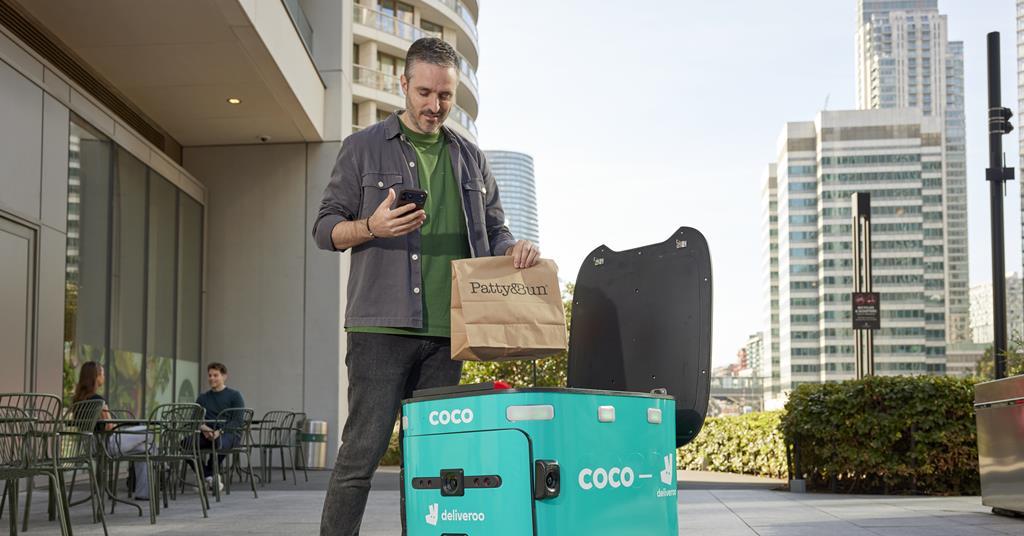
The Grocer reports Deliveroo is launching robot deliveries with US firm Coco, starting in Canary Wharf this month with merchants including Patty&Bun, Signorelli and Beam, then Milton Keynes, Leeds, Stockton-on-Tees and Nottingham. The robots have a top speed of 21kph and carry four 18-inch pizzas. Most orders will still go by rider; the robots suit short urban hops. Deliveroo CEO Miki Kuusi, who also heads DoorDash International, said robots and drones should benefit high street businesses of all sizes.
Coco enters a UK market long dominated by Starship (Co-op, Uber Eats, Just Eat). Simon notes Morrisons is trialling robot deliveries from four stores with Just Eat and Starship. The backlash is live: Living Streets says the robots put disabled and vulnerable pedestrians at risk, and a YouGov poll it commissioned found 60% of respondents wanted them outlawed from pavements.
Why it matters Last-mile cost is the prize, pavement politics is the risk. Any retailer putting its name on a robot inherits the backlash.
The Grocer: Deliveroo rolling out robot deliveries with Coco
Uber pays $2.3 billion to become America’s catering leader

Stephan Soroka’s post unpacks Uber’s all-cash purchase of ezCater, the platform companies use to order food for meetings and staff lunches. ezCater works with more than 140,000 restaurants, generated over $2.5 billion of gross bookings in the last twelve months, averages above $400 an order and is already profitable on a non-GAAP operating basis.
Why catering is different: orders are large, scheduled days ahead so they fill quiet hours, and bought by companies that rarely switch once accounts and invoicing are set up. Uber for Business already holds the corporate accounts of 300,000 companies. DoorDash saw it first, launching tray catering and Meal Manager in April with team-sized orders up 30% year on year, but is live in only two cities. So DoorDash is building while Uber buys the leader.
Why it matters Scheduled, high-value, B2B baskets with sticky accounts are where delivery is heading. The same logic applies to business customers in retail.
Stephan Soroka on LinkedIn: Uber just paid $2.3 billion
An open letter to McDonald’s: fix the drive-thru before it’s too late

Matt Martin, who spent 16 years at Walmart and Sam’s Club and built Scan & Go, writes to Chris Kempczinski as a fan. His six points: the drive-thru is too slow (measure arrival to food in hand, by store); “pull forward and park” has become the process and games the timer; orders are wrong too often; kiosks replaced people rather than freeing them, so nobody is home when something goes wrong; pay the hard shifts like they are hard; and the bar is set in your own car park, where Chick-fil-A moves a double lane faster, gets the order right and does more than twice the revenue per location while closed on Sundays.
His closing line: Hardee’s did not fade because people stopped liking burgers, it faded because the experience stopped being worth the trip. Simon’s framing: adopting tech can lead firms to neglect the customer experience.
Why it matters Technology that adds friction erodes a brand faster than any campaign can repair. Measure what customers feel, not what the timer shows.
Matt Martin on LinkedIn: An open letter to Chris Kempczinski
Why a market leader still needs retail media

Alex Lawson’s six reasons for leaders to keep spending, with grocery in mind: defending share costs less than buying it back; the real threat is the retailer’s own label, not the number two brand, and retail media intercepts the shopper at the moment of trading down; shelf share of voice is a distribution metric, not mental availability; category growth benefits the leader most; owning the space denies it to competitors; and it improves the retailer relationship, because “we do business with people who do business with us”.
Why it matters A board-ready argument for keeping retail media on when you lead the category, and the mirror image for a retailer selling that media.
Alex Lawson on LinkedIn: retail media for market leaders
Tesco’s interims: Whoosh up 37%, Tesco Media growing, buyback raised
Tesco’s H1 2026/27 results show group sales up 1.6% at constant rates (UK up 2.1%), group like-for-like up 1.0% with UK food up 2.4%, and adjusted operating profit up 6.3% to £1,783m. Customer satisfaction is at an all-time high. Ken Murphy calls out the two areas Simon follows: online sales grew 8%, Whoosh grew 37% and is on track for over £500m of sales this year, with Uber Eats and Deliveroo partnerships extending rapid delivery and a new F&F website. On AI, Tesco is extending Your Clubcard Prices and rolling out a meal planning assistant, and Tesco Media “grew strongly”, with an enhanced self-service platform for advertisers.
Capital expenditure guidance rises to about £1.7bn from about £1.6bn, and the share buyback to £950m from £750m. Return on capital employed was 15.2%.
Why it matters The leader is compounding on rapid delivery, personalisation and media. These are the benchmarks any UK retailer’s own data and media businesses get measured against.
Tesco plc: Interim results 2026/27
Sainsbury’s held merger talks with Morrisons

The FT reports Sainsbury’s held preliminary talks with private equity-owned Morrisons between November 2025 and February this year before walking away. There are no active talks, though people close to it did not rule out a restart. On paper the combination would have 23.6 per cent of the market against Tesco’s 27.8 per cent (Worldpanel by Numerator), and would almost certainly require store disposals; the CMA blocked Sainsbury’s £7.3bn bid for Asda in 2019. Aldi and Lidl now hold a combined 19.3 per cent. Morrisons carries £7.5bn of debt from its £10bn 2021 buyout by CD&R.
The FT frames the talks against Simon Roberts’ push to focus on food: Sainsbury’s has exited banking and, in the FT’s words, “recently agreed to sell Argos”. Simon Andrews adds that he has long argued Amazon should buy a UK supermarket, and Morrisons would be a good fit.
Why it matters Home turf. The FT places the Argos sale inside Sainsbury’s food-first strategy, and regulators’ appetite for grocery consolidation is being tested again.
FT: Sainsbury’s held merger talks with smaller rival Morrisons
AI
a16z’s Top 100 consumer AI apps: usage is wide, spending is narrow

The seventh edition adds a ranking by observed US consumer card spending (YipitData) alongside web and mobile traffic. Only 11 products debut, the fewest yet. The headline: nearly half of US consumers report using AI but only 25% use it daily, and as of August just 4.5% had a paid personal subscription to ChatGPT, Gemini or Claude, up from 2.1% a year earlier. Spending follows a power law: the top 10% of spenders account for roughly half of observed spend, the top 1% average $903 a month against $25 for the median payer, and only 13% of people paying for one AI product pay for a second.
ChatGPT remains the leader with roughly twice Gemini’s web visits and six times Claude’s; Claude is now the clear number three. 29 of the top 50 vendors by spend do not appear on either traffic list, because power users buy coding, creative and automation tools. a16z’s conclusion is that consumer AI needs a new business model, probably an old one: ads and transactions rather than subscriptions.
Olivia Moore’s Bloomberg interview makes the founder case: the big three dominate, most non-LLM consumer AI is really prosumer, and social, dating, entertainment, personal finance, health, marketplaces, travel and retail have no clear winner yet.
Why it matters The paying AI audience is small and prosumer. Retail and commerce AI has no consumer winner yet, which is both the opportunity and the warning.
a16z: The Top 100 Gen AI Consumer Apps, 7th edition · Olivia Moore on LinkedIn: Bloomberg interview
Seth Godin: build a second-wave AI business

Godin’s long post argues most AI success stories so far are cost reduction or speed, which is an easy sale but a race to the bottom and finite. The opportunity is generative: AI that creates value, growth and connection. People pay premiums for status, affiliation and freedom from fear; organisations buy to avoid blame, claim credit and reduce uncertainty, because the real question is “what will I tell my boss?”. Repeat purchases are won on switching costs and relentless incrementalism, new purchases need an internal champion with a story. “Mechanics without a story is the race to the bottom.”
Why it matters A useful filter for every AI pitch landing on a CMO’s desk: does it create something customers would pay more for, or just shave cost?
Seth’s Blog: Building a second-wave AI business
Ben Affleck’s AI company: tools for crews, not prompt-to-video

At Bloomberg Screentime 2026, Artists Equity CEO Ben Affleck discussed Hollywood economics, artist-focused business models and AI’s role with Lucas Shaw (the video page was read; the talk itself was not transcribed). Linas Beliūnas’ widely shared post gives the shape of the company: a 16-person AI business that Netflix paid $587 million for, built because filmmakers need AI they can control rather than generate with. The team shot its own dataset and built models around filmmaking techniques rather than actors’ performances; each production can train on its own dailies and keep the learning inside the production. It helps with missing shots, relighting, background replacement and VFX consistency while the crew keeps creative judgement. Affleck’s line: “Craft is knowing how to work. Art is knowing when to stop.”
Why it matters Controllable AI inside the production stack, trained on your own footage, is the model for brand content too. Own the dataset.
Bloomberg: Ben Affleck on AI and Hollywood economics (video) · Linas Beliūnas on LinkedIn
OpenAI makes ChatGPT ads more measurable and more visual

Digiday reports OpenAI is answering advertiser complaints since it began selling ads in ChatGPT in February. The current format is name, logo, headline, description, landing page and image; later this month it will test image ads in the US during image generation, clearly labelled. On measurement it is expanding in-house tools and partner integrations with Kochava and 10 other partners, with geo-based incrementality in early tests with Haus, Measured and WorkMagic. Brand suitability pilots with DoubleVerify and IAS will not give them access to user conversations.
The harder problem is inventory. Zeno’s Shamsul Chowdhury: about 2.5 billion prompts a day on ChatGPT against about 15 billion Google searches, and one ad placement versus Google’s many.
Why it matters Test budgets only until measurement is proven. A contained test in high-intent categories is reasonable; a big bet is not yet.
Digiday: OpenAI moves to make ChatGPT ads more measurable
Bain: only 6% of marketers say AI is paying off in a big way

Business Insider’s CMO Insider reports Bain’s survey of 1,397 senior marketing and finance executives: 95% have adopted AI tools, 6% say AI delivers significant performance impact today. Bain’s “leaders” (more than 11% revenue growth and more than 7% market share growth) were twice as likely as laggards to credit AI with double-digit growth or savings, and they centralise AI strategy, rebuild workflows and point AI at customer-facing uses of first-party data.
Dentsu Creative found 70% of 1,950 senior marketers have not yet seen major cost efficiencies; PwC found 56% of 4,454 CEOs saw neither higher revenue nor lower costs. One CMO told Bain that teams of five to 10 can now do what took up to 50. Indeed says marketing job postings are 25% below pre-pandemic levels; Wix is hiring “full-stack marketers”.
Why it matters The board will ask this question soon. The leaders’ pattern is organisational (centralise, rebuild workflows, restructure teams), not more tools.
Business Insider: Only 6% of marketers say AI is paying off
Personal agents, shown not told: ChatGPT’s Dots

Chris McKay points to Holly Li’s demo of the new Dots feature in ChatGPT as the best explanation of what a personal agent is: natural back-and-forth with a “dot” that is proactive and helpful, and a way for non-technical people to picture how they would work with one.
Why it matters Agents acting for customers are the next interface between brands and shoppers. How a retailer shows up inside them is a 2027 question.
Chris McKay on LinkedIn: Holly Li demos ChatGPT’s Dots
McKinsey and The Atlantic: AI is changing how we work. Is your organisation ready?
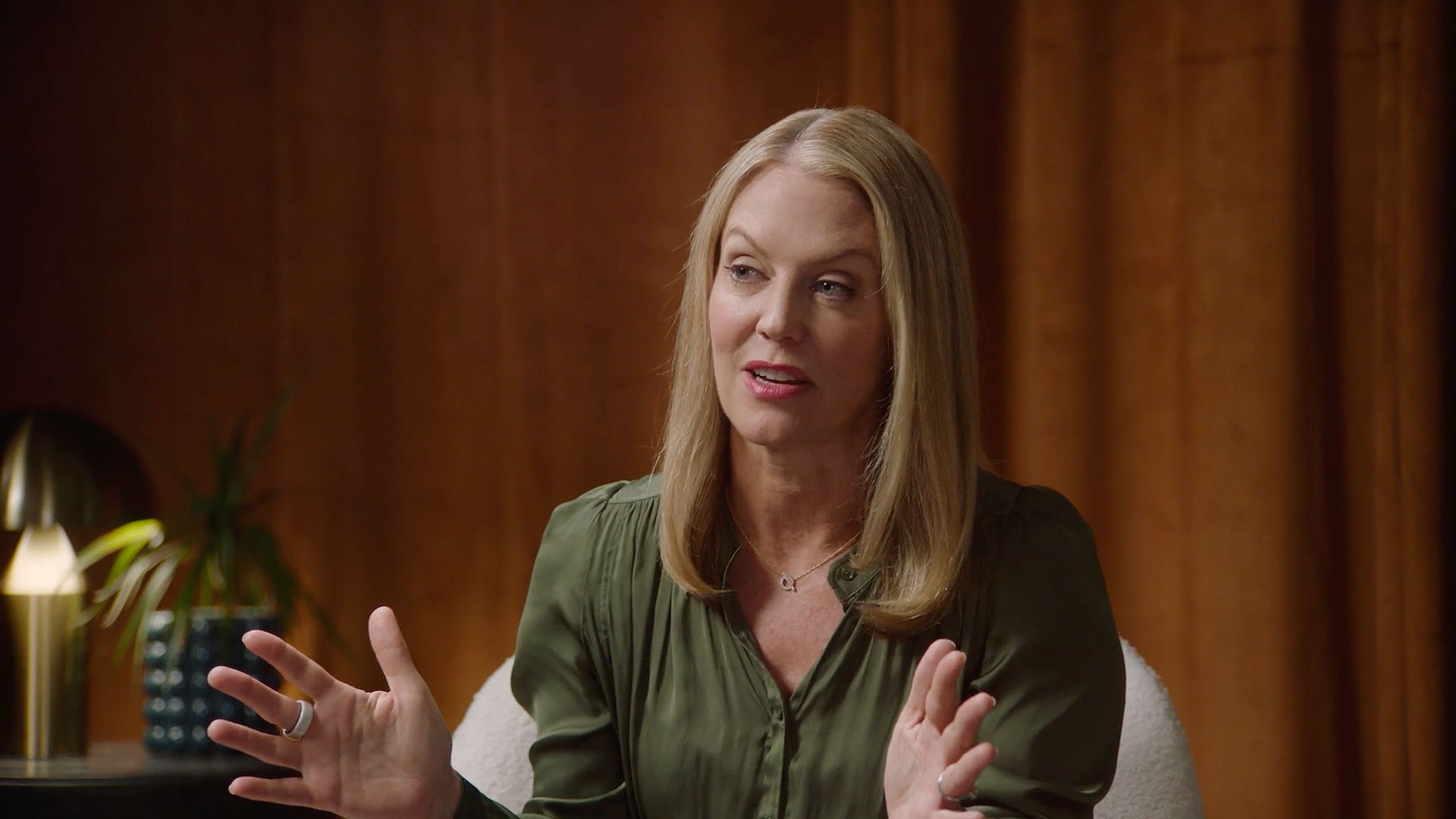
In sponsored content with The Atlantic’s Nicholas Thompson, McKinsey’s Alexis Krivkovich estimates 57 percent of today’s work activity can be done with existing AI, while stressing that does not mean half of jobs disappear. Roles transform, with judgement and relationships mattering more than single-subject expertise. The risk is to how junior people build skills if AI does the routine work; the opportunity is more time for coaching and apprenticeship. Companies whose employees trust AI are redesigning roles, upskilling, changing incentives and having senior leaders demonstrate how they use it, including where they get it wrong.
Why it matters Adoption is a leadership design job, not a software rollout.
The Atlantic (McKinsey sponsored): AI is changing how we work
Agencies
Amazon’s upfront: a pitch to be the layer through which you buy everyone else

Pedro Avery of Bicycle, after 38 years of upfronts, says Amazon Ads’ 2027 upfront felt like a different industry: 75 minutes, every section tied to a commercial proposition. What stayed with him was the strategy. Through its DSP and partnerships with Netflix, Disney, Channel 4 and Sky, Amazon says brands can reach more than 90% of monthly ad-supported VOD viewing in the UK through its ecosystem. That is not a pitch for Prime Video, it is a pitch to own the route to the eyeballs.
Three things that mattered: TV has become local, with hundreds of creative variants from one national buy (Birmingham sees its nearest dealership and local pricing, Liverpool something else); attention beats frequency, with Amazon citing Lumen Research putting cumulative attention at eight times the impact of frequency on brand lift; and Prime Video joining BARB/CFlight. His caveat: an ecosystem that sells the media, personalises the creative, activates the data and reports the result is asking for a lot of trust. Use the data, but do not outsource the verdict to the party being marked.
Why it matters One national idea adapted by store catchment, bought through one layer, is exactly what a national retailer with local stores wants. Insist on independent measurement.
Pedro Avery on LinkedIn: 38 years of upfronts
Stagwell launches Stagwell Media, “powered by agentic AI”

Stagwell has folded Assembly into a new global media agency, Stagwell Media, built on its agentic platform Machine OS and tools including The Media Machine, Stagwell Search+ and Stagwell Curate, working alongside Crispin, GALE, Goodstuff and Locaria. Mark Penn says the traditional media agency model “wasn’t built for the future of media”. Liz Rutgersson leads it, with regional CEOs across APAC, Europe, India and MENA, 50-plus markets and clients including Lenovo, DP World, Mastercard and P&G.
Why it matters Another holding company betting that a media agency is software plus senior people. Test the agentic claims hard in any pitch.
Marketing-Interactive: Stagwell launches Stagwell Media
Jon Wilkins on the immortal life of agencies

Episode 90 of Codefinery’s podcast has the Naked Communications co-founder on what made Naked distinctive: hiring “brilliant misfits”, codifying the culture as it went international, and building trust through neutrality by putting client interests first. He covers the move via Karmarama into Accenture and the acquisition spree that built Accenture Song, and his new consultancy, The Intangibles, aimed at opportunities client-side CEOs cannot yet see.
Why it matters The agency model keeps reinventing; the durable value is trust and neutrality. A good lens for choosing partners.
Codefinery: Episode 90, Jon Wilkins
Glasses
Blind and visually impaired people fear a smart glasses backlash

The BBC meets Darren Paskell, who is visually impaired and uses Meta glasses to read post and labels: “absolutely life-changing”. But venues are restricting them: courtrooms, some schools, pubs, restaurants, cinemas and theatres, after reports of women being secretly recorded and harassed. The RNIB’s Khadija Raza warns that bans could leave blind and partially sighted people feeling excluded. Activist group Everyone Hates Elon put fake TfL-style stickers on the Underground and billboards calling the devices “pervert technology”; a petition called Stop Smart Glasses asks retailers not to sell them. EssilorLuxottica sold seven million pairs last year. The government says it has no plans for specific legislation.
Why it matters Retailers need a store policy on camera glasses and an accessibility position, and may be asked whether to stock them at all.
BBC News: Blind and visually impaired people fear smart glasses backlash
Amazon drivers’ smart glasses are going to be an image problem

Bloomberg Opinion’s Dave Lee predicts a privacy furore. Amazon’s driver glasses, in development for more than three years, give hands-free guidance on packages and snap the proof-of-delivery photo. What the October announcement did not stress: static images of whatever the wearer sees, potentially several thousand a shift, sent back to be analysed by humans and fed into an AI system, including backyards and other private property, with people and number plates blurred. Amazon’s goal is 5,000 drivers wearing them by the end of this year and more than 20,000 by the end of 2027; more than 275,000 pilot deliveries are done.
Why it matters Operational AI in the last mile carries a customer-trust cost, and the brand pays it, not the operations team.
Bloomberg Opinion: Amazon drivers’ smart glasses
Samsung’s first Android XR glasses arrive in November

Android Authority, citing The Korea Herald, says Samsung’s first AI glasses launch in November. They have no display: cameras, microphones, speakers and Gemini, with heavier processing on a connected Galaxy phone, and frames from Gentle Monster and Warby Parker. Counterpoint Research says global AI glasses shipments rose 263% year on year in the first half of 2026, display-less models were 96% of shipments and Meta held 94% of that segment. Samsung says LEDs inside and outside the frame signal recording, and the camera shuts off if the external indicator is covered.
Why it matters A second big player makes camera glasses mainstream faster. Visual search and in-store behaviour will change with them.
Android Authority: Samsung’s Android XR smart glasses launch window
Plus
OK COOL’s 2027 trend report: the societal Ozempification of personality
A gated report (email to download). The page promises survey data from 2,900 people, a word of the year (taste), a look at purity versus performance, why platforms should not be treated in isolation, creators rewriting the CV playbook, and a call for brands to “put ya back into it”.
Why it matters A culture read for creative planning; the substance needs the download.
OK COOL: 2027 trend report
Dentsu Creative 2026 CMO Report: Making it Real

Based on 1,950 senior marketing decision-makers across 14 markets, the report describes a reset: CMOs have moved from “what technology should we buy?” to “how do we make it work for our people, business and customers?”. The headline stats on the page: 77% of CMOs are less interested in cost efficiencies than cultural velocity, 78% agree their brand should start a conversation rather than finish one, and 80% want innovation aimed at their biggest business challenges rather than as a side project. The sections run from potential to proof, from assets to impact, and designing for difference as algorithms accelerate sameness.
Why it matters A peer benchmark for the accountability era: prove value, connect fragmented experiences, stand out in automated environments.
Dentsu Creative: 2026 CMO Report
Jeffrey Cole: “the third massive disruption in 25 years”

Jeffrey Cole, director of USC’s Center for the Digital Future and author of Disrupters at the Gate, on CNBC’s Squawk Box about his book and the wave of disruption now under way. Simon worked with Cole during his WPP years and rates him. The video page and description were read; the interview itself was not transcribed.
Why it matters Context for the AI moment from someone who has tracked digital behaviour for decades.
CNBC: Jeffrey Cole interview (video)
McKinsey Global Institute: Workforce in motion
MGI estimates roughly 11 million US workers in declining occupations may need to move to new jobs by 2035 (six to 16 million depending on the pace of automation), yet only about one in seven has a direct pathway with little retraining. Roughly 60 percent of growing employment could be in the top two wage quintiles, concentrated in healthcare, construction and management; more than 70 percent of declining employment sits in the bottom two, led by office and administrative support, retail and sales, and transport and logistics. About 85 percent of growing jobs need credentials. Demand for AI fluency is up 11 times since 2022 and adaptability fivefold.
Why it matters Retail and sales roles are named among the declining. A workforce planning signal for any large store estate.
McKinsey Global Institute: Workforce in motion
Newhouse family rules out selling Condé Nast

After Roger Lynch’s abrupt exit to run Mattel, Advance chair Steven Newhouse gave the FT a categorical “no” on a sale: “we’ve been a media owner for 100 years. So we’re not in it for the glamour.” Lynch spent seven years merging US and international operations and cutting jobs; he told the FT earlier this year that 2025 revenue was roughly back to 2021 levels, reported at nearly $2bn, and the company “far more profitable”. Mike Perlis is interim CEO. Newhouse blames print advertising’s decline, “monopoly tech companies stealing our content” and the loss of the Russian business for the hard choices.
Why it matters Vogue, The New Yorker and Vanity Fair stay family-owned and leaner. For partnerships, Condé is a long-term partner, not an asset in play.
FT: Billionaire family rules out sale of Condé Nast
Ari Emanuel on Skydance, happiness and “Roll the Calls”

Andrew Murfett interviews the Endeavor boss ahead of his memoir, written with J.R. Moehringer. On the Paramount-Warner deal Emanuel is delighted: “now we’re going to have four really viable streamers”, and he says Ellison is committed to 30 films a year, 45-day theatrical windows, 170 series and a $30 billion content spend. For content suppliers that means Amazon, Netflix, Paramount-Warner and Disney as buyers. On why the attorneys general settled: 67 countries approved it, cinema chains and Charter backed it, and Skydance had put up a bond. On happiness: “you’d rather have a meaningful life”.
Why it matters The supply-side view: more buyers of premium content means more premium inventory and more money chasing sport and events.
Andrew Murfett on LinkedIn: An interview with Ari Emanuel